
Enhancing Facilities Management with AI Predictive Insights
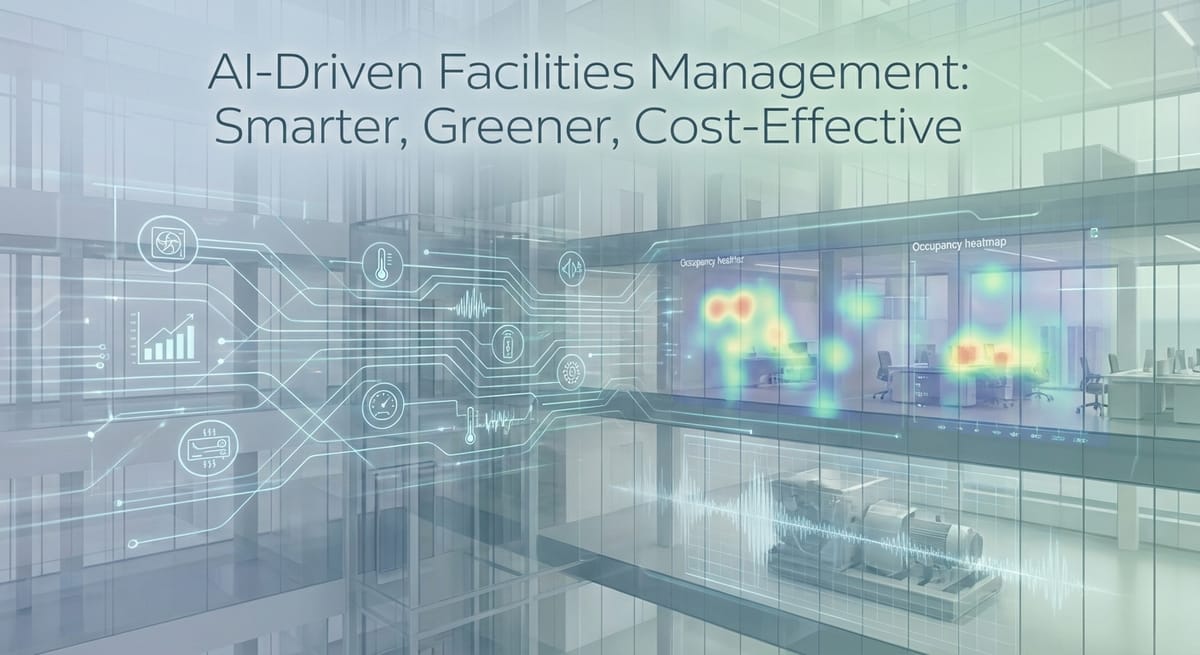
The AI Facilities Management Revolution in Corporate Buildings
Facilities and real estate directors face increasing pressure to reduce costs while achieving sustainability targets. AI facilities management offers a powerful solution by analyzing patterns in energy use, equipment performance, and space allocation to drive measurable improvements in operational efficiency.
This technology processes large amounts of historical data to identify trends that humans might miss. For example, a heating system may show early signs of failure weeks before breaking down. Energy consumption could spike predictably at certain times, or some spaces might remain unused while others are overcrowded.
Optimizing Energy Use with AI Data Analysis
AI excels at identifying energy waste. It monitors consumption throughout buildings in real time and compares usage against weather, occupancy, and operational schedules. When the system detects unusual patterns, it sends immediate alerts.
One manufacturing facility cut energy costs by 20 percent in six months. The AI found that HVAC systems operated at full capacity during low-occupancy periods. Adjusting schedules based on AI recommendations led to significant savings. The system paid for itself within a year.
Modern smart building platforms integrate with existing infrastructure. Sensors capture data that AI models use to learn building operations. These models recommend ideal temperature settings, lighting schedules, and equipment runtimes. Facilities teams review and implement the suggestions without major capital expenses.
Preventing Equipment Failures with Predictive Maintenance
Equipment breakdowns disrupt business and increase costs. AI facilities management changes maintenance from reactive to proactive. It tracks vibration, temperature, and performance data to predict failures before they happen.
A corporate campus with 50 buildings used predictive maintenance AI to monitor 200 critical assets like chillers, boilers, and elevators. Within three months, the system identified 15 potential failures. Maintenance teams fixed issues during scheduled downtime, avoiding $300,000 in emergency repairs and lost productivity.
The AI improves continuously. Each maintenance action updates the system, making predictions more accurate. False alarms decrease while detection improves.
Using AI for Smarter Space Optimization
Office space is a major cost. Many companies pay for more square footage than they use. AI analyzes occupancy through badge swipes, booking systems, and sensors. It reveals which areas remain empty and which are crowded.
One financial services firm found that 40 percent of its office space was vacant most days. AI mapping showed uneven usage, with some floors in high demand and others underused. The company consolidated operations onto fewer floors and subleased the rest, saving over $2 million annually.
These tools also help plan future space needs by projecting growth and suggesting layouts. They consider team sizes, collaboration needs, and work habits. Facilities directors can make informed decisions based on data rather than estimates.
Successful Implementation Starts with Clear Goals and Quality Data
Success starts with realistic goals. Begin with one building or system. Measure the results and document cost savings and efficiency gains. Use early successes to build support for wider adoption.
Data quality is more important than quantity. Clean, accurate data produces better predictions. Invest time organizing existing information before feeding it to AI systems. Poor data leads to poor recommendations.
Staff require training on new tools. AI provides insights, but people make final decisions. Establish clear workflows for reviewing recommendations and taking action. Build confidence with hands-on experience.
Aligning Cost Savings and Sustainability with Building Analytics
AI delivers financial returns while lowering environmental impact. Reducing energy use cuts carbon footprints. Extending equipment life reduces waste. Better space use cuts the need for new construction.
These results satisfy both CFOs and sustainability committees. Directors can show progress toward climate goals with concrete data. Board presentations become easier when cost reduction aligns with environmental stewardship.
The technology keeps evolving. Sensors are becoming cheaper. AI models are more sophisticated. Integration with building systems gets simpler. Early adopters gain competitive edges and operational know-how that grows over time.
The Path Forward for AI Facilities Management
The question is no longer whether to adopt AI but how quickly to implement it. Competitors already use these tools to lower costs and improve operations. Delaying means falling behind.
Start by assessing current systems and data availability. Identify pain points where AI can deliver quick wins. High energy bills? Begin there. Rising maintenance costs? Focus on predictive maintenance. Unclear space utilization? Use occupancy tracking and space optimization.
Partner with vendors experienced in facilities management. Generic AI solutions often miss specific building challenges. Choose platforms designed for corporate real estate and facilities operations. Request case studies and references from similar organizations.
AI facilities management gives facilities teams powerful data insights while letting people focus on strategy and implementation. This combination creates better buildings, lowers costs, and drives measurable progress toward sustainability goals.
Embrace AI facilities management now to unlock smarter operations and future-proof your facilities. Start small, measure results, and scale to maximize savings and environmental benefits.